Scrolling through messages or online chats, you might see someone type ASL and wonder 🤔, “What does ASL mean in text?” This common abbreviation has caused confusion for many, especially if you’re new to online slang or texting culture.
In this comprehensive guide, we’ll explain ASL meaning in text, its origin, how to use it properly, common examples, and tips for communicating clearly. By the end, you’ll never be puzzled by ASL again!
ASL Meaning in Text (Quick Answer) ⚡
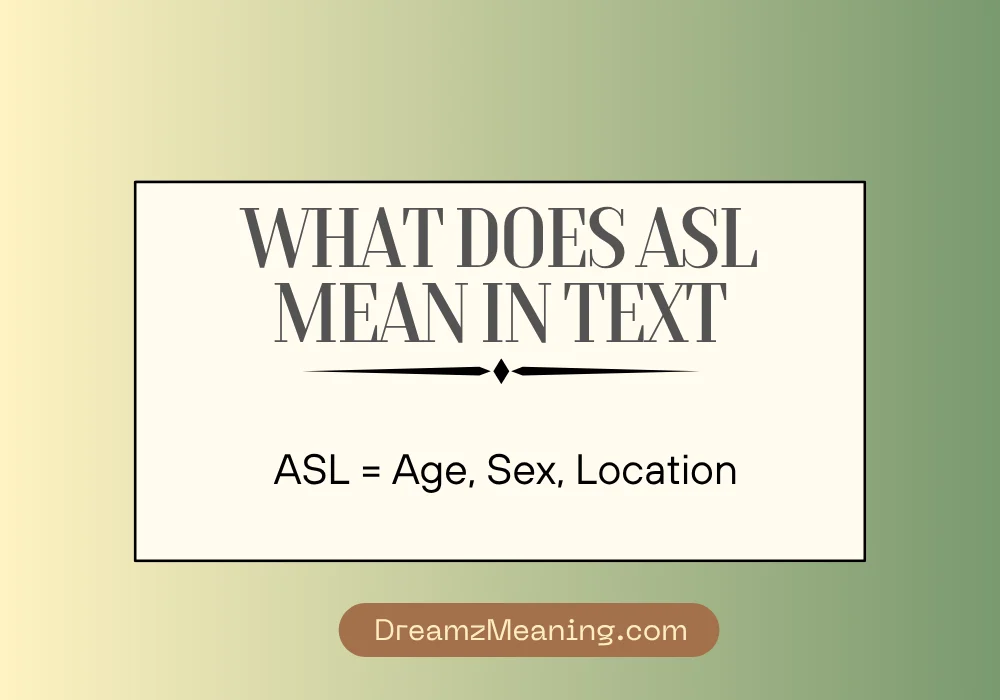
The most widely recognized meaning of ASL in text is:
ASL = Age, Sex, Location
It’s typically used in chatrooms, messaging apps, or social platforms when someone wants to get to know another person quickly. It’s a shorthand way of asking basic personal information.
Example:
“Hey! ASL?”
This is essentially asking: “What’s your age, sex, and location?”
Why Do People Use ASL in Text? 🤷♀️
ASL became popular because it’s short, fast, and gets straight to the point. Instead of typing a long question, users just type ASL.
- ✅ Saves time in online conversations
- ✅ Quickly establishes basic context about the person
- ✅ Common in casual and anonymous chats
While it’s convenient, using ASL requires sensitivity because it asks for personal information.
Origin of ASL: Where Did It Come From? 🕰️
ASL originated in the early days of internet chatrooms and messaging boards, especially in the 1990s. It was widely used in platforms like AOL Instant Messenger (AIM) and ICQ, where people wanted quick introductions.
Over time, it became a standard shorthand in casual conversations, especially in online dating, gaming communities, and anonymous chats.
How to Use ASL in Text Conversations 📱
ASL is usually used as a question at the start of a chat to quickly gather basic details. Here’s how it’s typically used:
- “Hi there! ASL?”
- “ASL? Just curious!”
- “Hey, ASL? 😄”
It’s concise, informal, and widely understood in casual online environments.
Is ASL Still Relevant Today? ⏳
With modern social media and dating apps, ASL is less common than before. Platforms now often display age, gender, or location automatically. However, it’s still recognized in casual texting or nostalgic chatroom communities.
It’s a classic example of early internet shorthand that has survived into modern texting culture.
ASL vs Other Abbreviations 🔍
It helps to compare ASL with similar abbreviations to avoid confusion:
| Abbreviation | Meaning | Context |
|---|---|---|
| ASL | Age, Sex, Location | Casual chats, early internet |
| BRB | Be Right Back | Messaging, casual |
| FYI | For Your Information | Professional & casual |
Can ASL Be Considered Rude or Invasive? 🚨
ASL isn’t offensive by itself, but it can feel invasive if used in the wrong context:
- ⚠️ Asking strangers for personal info can be inappropriate
- ⚠️ Avoid in professional or formal chats
- ✅ Safe to use in friendly or casual chats among peers
Always consider your audience before asking personal questions.
Modern Alternatives to ASL 💡
Since platforms now often share profile info automatically, people use ASL less frequently. Modern alternatives include:
- “Where are you from?”
- “How old are you?”
- “What’s your gender?” (if relevant)
These alternatives feel more natural and less abrupt than ASL.
Tips for Responding to ASL Questions ✅
If someone asks “ASL?” here’s how to respond:
- “I’m 25, female, from New York.”
- “20/M/California 😄”
- “Prefer not to share, hope that’s okay!”
You can choose to answer partially or skip details if you’re not comfortable.
Common Mistakes When Using ASL 🚫
- ❌ Using it in professional emails or work chats
- ❌ Asking strangers without context
- ❌ Forgetting it’s personal info, so respect privacy
Context and consent are key to using ASL responsibly.
FAQs :
What does ASL mean in texting?
ASL stands for Age, Sex, Location. It’s used to quickly ask someone for basic personal info.
Is it rude to ask ASL?
Not necessarily, but it can feel invasive if the person isn’t comfortable sharing. Use it in friendly, casual chats.
Where is ASL commonly used?
Originally in chatrooms and early messaging platforms. Today, it’s mostly nostalgic or used in informal texting.
Can ASL have other meanings?
Yes. Outside texting, ASL can refer to American Sign Language. Context is always important.
Final Thoughts:
Now you fully understand what ASL means in text. It’s a quick way to ask someone’s age, sex, and location — mostly casual and informal.
Using ASL correctly depends on context, audience, and comfort level. When used thoughtfully, it keeps online conversations short and expressive without being intrusive.
👉 Keep learning modern text abbreviations and slang to communicate confidently in today’s digital world 🚀

I am Mike Grobgaard, a writer at DreamzMeaning who specializes in explaining text and slang meanings.At DreamzMeaning, I create clear and simple articles that break down modern words, abbreviations, and online phrases.My goal is to help readers easily understand everyday text language and communicate with confidence.